Turning Up the Heat: What are Thermoplastic Markings?
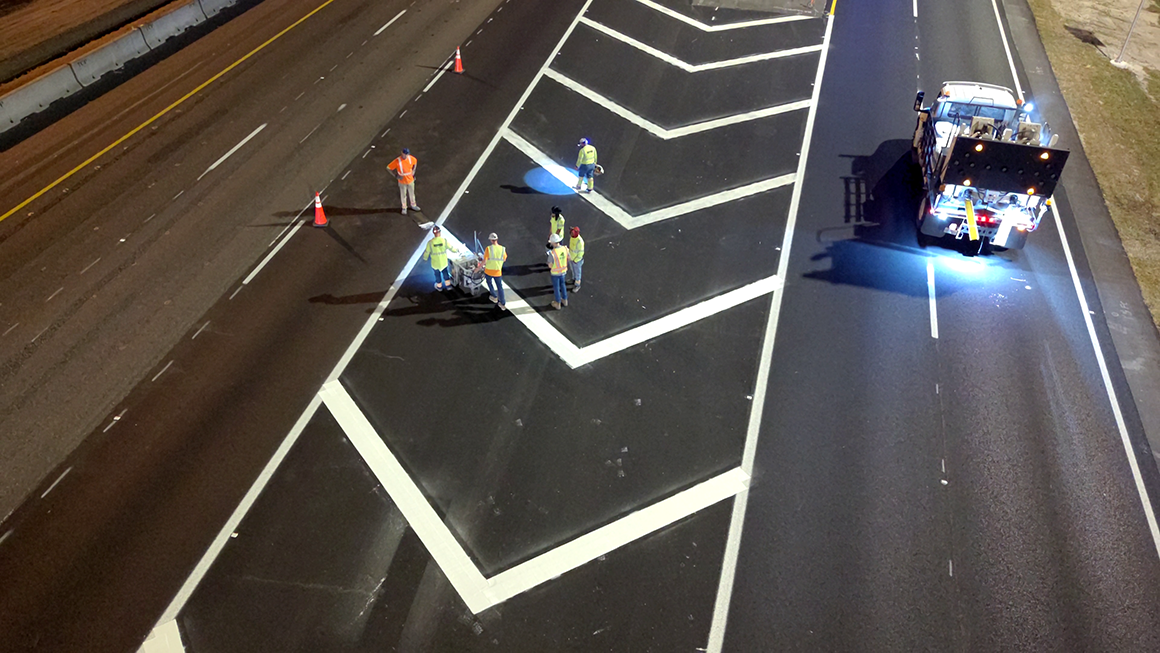
Thermoplastic work was recently completed on the ramp widening project from westbound I-4 to eastbound S.R. 528. Crews added new markings to help guide drivers through the updated traffic pattern, improve visibility, and enhance safety on the ramp.
Thermoplastic pavement markings are a trusted way to add long-lasting lines and symbols to roads. The material is a solid plastic that is heated until it becomes a liquid. As it cools, it hardens and forms a durable, highly visible marking. Crews typically apply thermoplastic after paving work is completed and the road surface is clean so the material can bond properly and last longer.
One of the biggest benefits of thermoplastic is durability. Unlike paint, which can fade or wear down quickly, thermoplastic bonds to the road surface and holds up well against heavy traffic and weather. Tiny glass beads are often added to help reflect headlights at night, improving safety by making the markings easier to see.
Applying thermoplastic is a precision-driven process. The pavement must be clean and dry, and the material must be heated to the right temperature, so it bonds properly. Once placed, it cools quickly, which allows crews to open the affected roadway to motorists sooner.
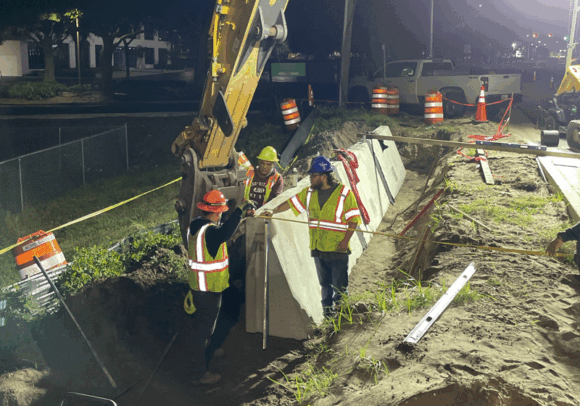 Gravity Wall Will Support New Sidewalk on Turkey Lake Road
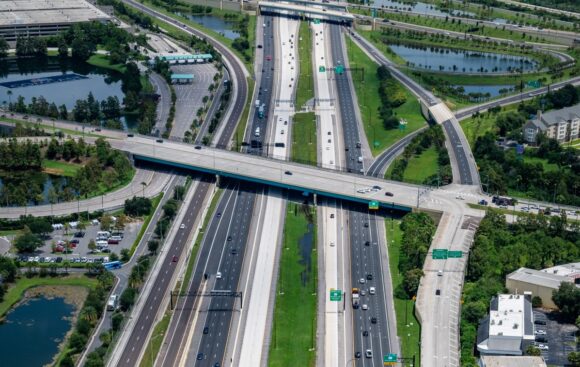 ATTENTION DRIVERS: Overnight Closure of Westbound I-4 Express from John Young Parkway to Kirkman Road October 27
 Need Help on the Road? Know Who to Call
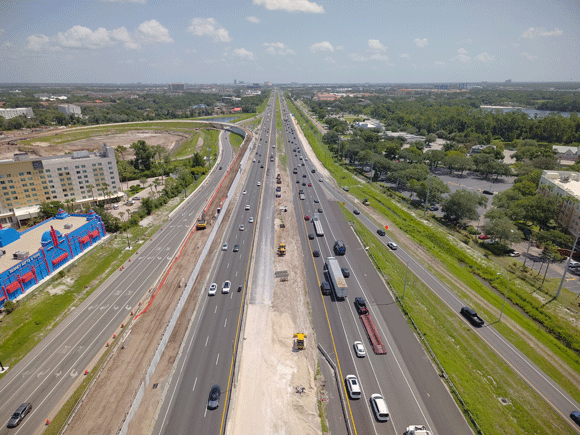 New I-4 Entrance Ramp Configurations from Apopka-Vineland Road Taking Shape