

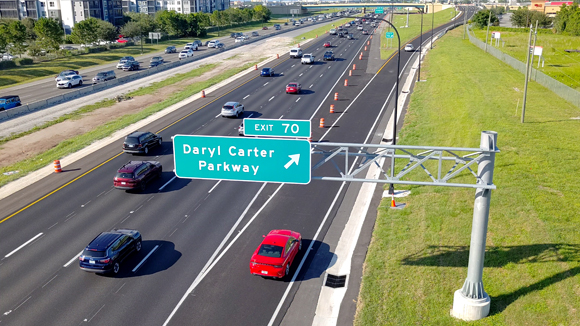
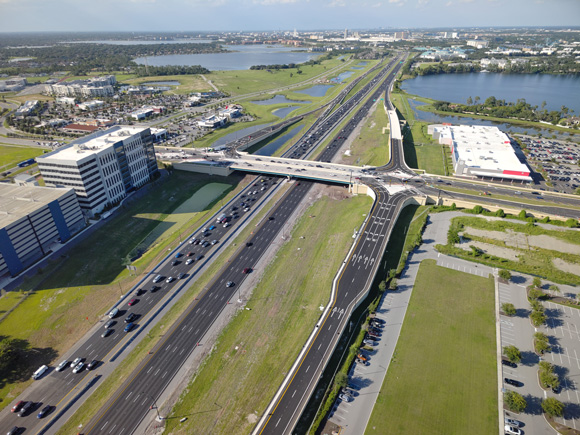
The Florida Department of Transportation (FDOT) opened the new Interstate 4 (I-4) interchange at Daryl Carter Parkway in the early morning hours of Saturday, July 19, marking a significant milestone in Central Florida infrastructure. The new interchange provides motorists with additional access to local residences, attractions, I-Drive, shopping outlets, and restaurants. It is also expected to help relieve congestion at the nearby I-4 interchanges at Apopka-Vineland Road (State Road (S.R.) 535), Central Florida Parkway, and Sand Lake Road (S.R. 482).
Around 3 a.m. on July 19, construction crews uncovered overhead signs and cleared barrels, cones, and directional signs before opening three new ramps — exit ramps from both directions of I-4 and an eastbound entrance ramp — providing direct access between I-4 and Daryl Carter Parkway. Law enforcement personnel positioned themselves at each ramp to ensure the safety of motorists using the new interchange. With the ramps now open, crews will finish project cleanup and move toward completion of the project later this summer.
Florida’s newest diverging diamond interchange (DDI) improves safety, increases traffic efficiency, and is cost-effective. Unlike a conventional interchange, the DDI briefly moves vehicles on Daryl Carter Parkway to the left side of the road at a traffic signal, eliminating left turns across traffic and reducing the frequency and severity of crashes. Traffic moves back to the right side of Daryl Carter Parkway at a second signal. With no left turn signal phase, a DDI can move nearly twice as many vehicles as a traditional interchange in the same amount of time.
Learn more about the I-4 and Daryl Carter Parkway interchange improvement project at I4Beyond.com/darylcarter.
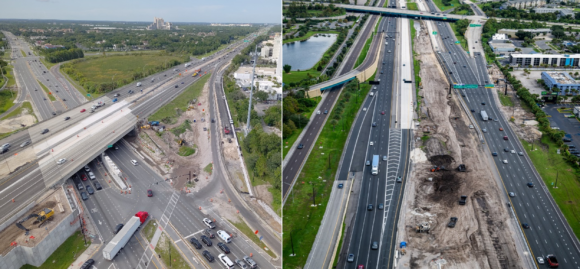 ATTENTION DRIVERS: Overnight Closures at the I-4 Interchanges of Apopka-Vineland Road and Sand Lake Road October 18-20
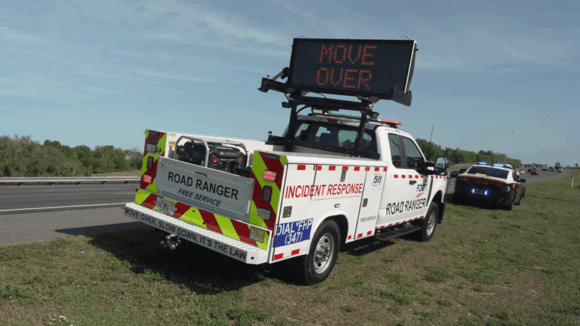 Need Help on the Road? Know Who to Call
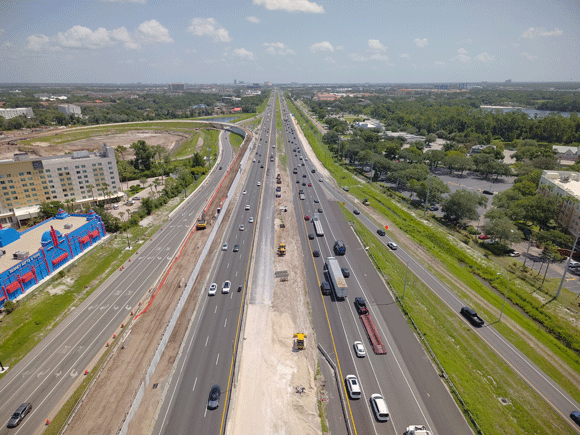 New I-4 Entrance Ramp Configurations from Apopka-Vineland Road Taking Shape
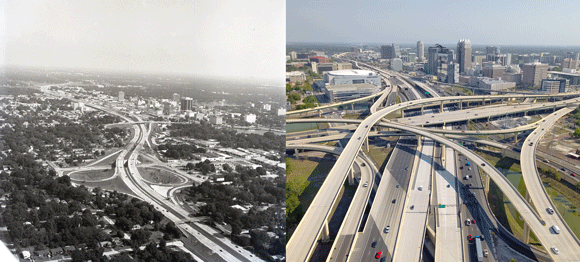 Every Mile Tells a Story: Celebrating 70 Years of the Interstate Highway System