

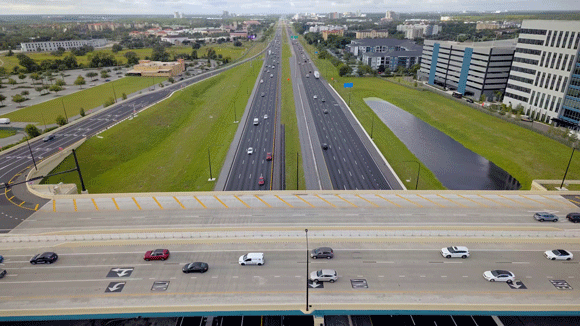
How Lane Widths are Determined
Have you ever noticed that lanes on some roads seem wider or narrower than others? That’s intentional. Lane widths are carefully designed for each roadway to promote safety, improve traffic flow, and accommodate the unique needs of drivers and the surrounding area.
The Florida Department of Transportation (FDOT) follows state and national design standards when determining lane widths. Engineers consider several factors, including the speed limit, traffic volume, the types of vehicles using the road, and available space.
The intended use of a roadway shapes lane widths. Wider lanes on higher-speed roads give drivers more room to maneuver and provide additional space for larger vehicles. On lower-speed roads, slightly narrower lanes can encourage more cautious driving while creating room for features like sidewalks, bicycle lanes, landscaping, medians, and turn lanes. On most interstates, including Interstate 4 (I-4), general-use lanes are typically 12 feet wide. This width provides enough space for passenger and commercial vehicles to travel safely at interstate speeds. Lanes on arterial roads are typically 10 to 12 feet wide. The width of these lanes is narrower to limit speeds, fit local spaces, and accommodate bike lanes and/or pedestrian features.
The width of roadway shoulders is determined by the type of road and its purpose. On interstates, outside shoulders are typically 10 to 12 feet wide to provide space for emergency responders and disabled passenger or commercial vehicles requiring assistance. Inside shoulders are usually 4 to 10 feet wide, providing an added safety buffer next to the median and room for maintenance or incident response. On arterial roads, shoulder widths vary depending on the roadway and surrounding environment.
On interstate entrance and exit ramps, lane widths may depend on the interchange’s design and location.
Lane widths are just one aspect of roadway design. Engineers also consider lane markings, barriers, drainage, roadway material, and other factors. Together, these elements create a roadway that is safer, more efficient, and built to handle traffic.
As part of the I-4 Beyond the Ultimate improvements, every lane, shoulder, and roadway feature is designed to meet current standards and support a safer, more reliable trip for everyone who travels the corridor.
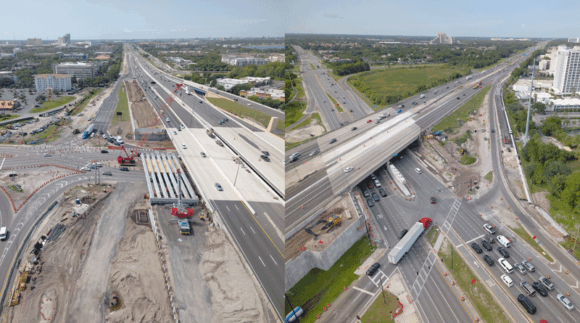 ATTENTION DRIVERS: Overnight Closures at the I-4 Interchanges of Sand Lake Road and Apopka-Vineland Road October 13-15
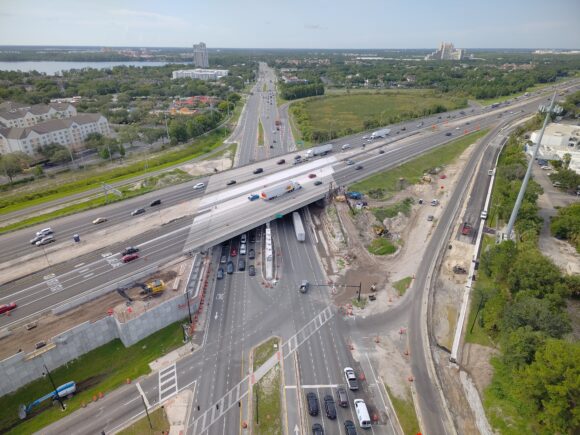 ATTENTION DRIVERS: Overnight Closures of Westbound I-4 Entrance Ramp from Apopka-Vineland Road October 11 and 12
 Need Help on the Road? Know Who to Call
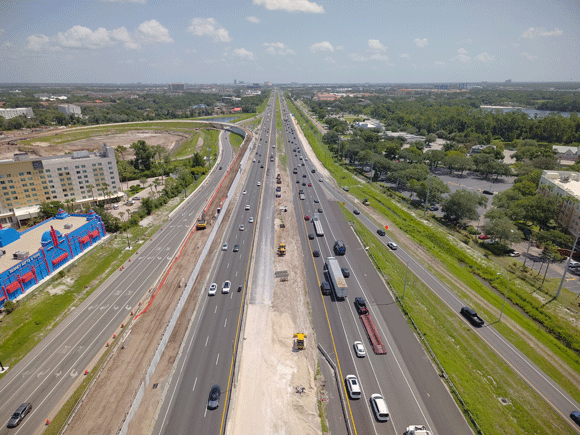 New I-4 Entrance Ramp Configurations from Apopka-Vineland Road Taking Shape