I-4 Beyond The Ultimate
 

January 2026

 
IN THIS UPDATE
* New Year, New Pavement: Crews Prepare Roads for New Sand Lake Loop Ramp
* Driving in Fog: Low Visibility, High Responsibility
* How Cones, Barrels, and Barriers Save Lives
* Coloring the Way to Sign Standardization


New Year, New Pavement: Crews Prepare Roads for New Sand Lake Loop Ramp

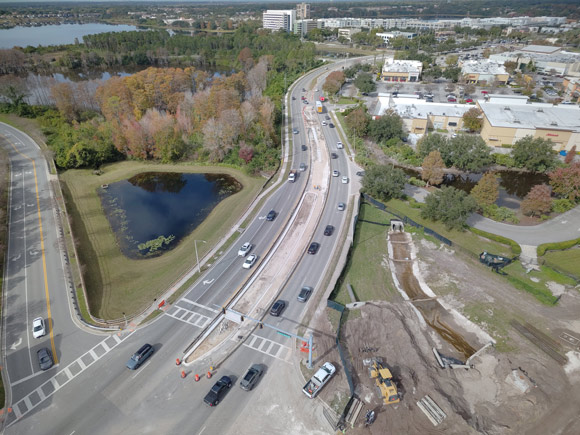
Turkey Lake Road is getting a smooth, new surface ahead of the opening of a ramp system designed to ease congestion at the I-4 and Sand Lake Road interchange.
 
Turkey Lake Road is getting a smooth, new surface ahead of the opening of a ramp system designed to ease congestion at the I-4 and Sand Lake Road interchange.

One of the biggest improvements the Florida Department of Transportation (FDOT) is making to the Interstate 4 (I-4) and Sand Lake Road (State Road (S.R.) 482) interchange is the addition of a new ramp system.

A big step toward the loop ramp’s opening later this year is a major milling and resurfacing operation on Turkey Lake Road, spanning from Sand Lake Road to where the new loop ramp and exit will tie in at Sand Lake Sound Road. Earlier this month, crews began nighttime resurfacing, which is expected to wrap up by the end of February.

The operation requires nighttime closures on Turkey Lake Road. Overnight on Sundays through Thursdays, crews are closing sections of either northbound or southbound Turkey Lake Road starting as early as 10 p.m. each night and reopening by 6 a.m. the next morning. Only one direction of the road is closed at a time.

When southbound Turkey Lake Road is closed, all southbound traffic will follow a detour that uses I-4.

Local traffic during the northbound closures will be limited to a single lane in each direction.

To know which side is closed each night and for full southbound detour details, visit the Turkey Lake Road paving operation web page for the most up-to-date information.

The new loop ramp will take motorists from westbound Sand Lake Road to Turkey Lake Road without turning left across traffic and eliminating the dangerous and congestion-inducing queuing of vehicles in the intersection. Drivers will also be able to exit directly from westbound I-4 to Turkey Lake Road.


Driving in Fog: Low Visibility, High Responsibility

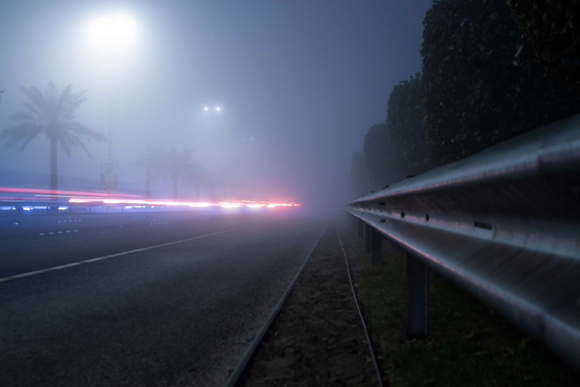
Foggy conditions are no problem if you stay focused and follow a few simple safety tips.
 
Foggy conditions are no problem if you stay focused and follow a few simple safety tips.

Central Floridians rarely need to worry about snowy conditions or icy roads while driving, but fog is a different story. Thick fog can roll in fast and make it hard to see vehicles, signs, and lane markings, especially in the early morning or at night. When visibility drops, even familiar roads can become dangerous. A few simple driving habits can help keep you safe when you’re navigating fog.

Make sure your headlights and taillights are clean and turned on whenever fog is present. It’s best to drive with your low-beam headlights on so you can see the road and other drivers can see you. High-beam headlights reflect off the fog and can make visibility worse. It’s just as important to make sure your taillights are on, as it makes your vehicle more visible to those behind you. Driving with only your daytime running lights on does not automatically turn on your taillights.

Slow down and leave extra distance between you and the vehicle in front of you. Fog reduces how far ahead you can see, which means you need to react more quickly. Driving at a lower speed gives you better control and can prevent skidding or hydroplaning in rainy conditions.

Be sure to signal turns and lane changes early. Using your turn signals well in advance lets other drivers know what you plan to do. Brake sooner than usual and avoid sudden movements. Clear signals help everyone move more safely in low visibility.

Foggy conditions require your full attention so you can respond quickly to changes around you. You should reduce distractions inside your vehicle. Put your phone away, turn down the radio, and stay focused on the road.

Fog brings moisture, so use wipers and defrosters to keep your windshield and windows clear to improve visibility and reaction time. Wipers remove mist from the glass, while defrosters prevent fog from building up inside the vehicle.

Finally, never stop in a travel lane, which can lead to serious crashes. If you’re struggling with visibility, use your signal and move completely off the roadway, then turn on your hazard lights once you are safely out of traffic.

Fog can be unpredictable, but safe driving choices make a big difference. Slow down, stay alert, and take extra care when visibility is low.

Learn more about how to drive safely in foggy conditions here.


How Cones, Barrels, and Barriers Save Lives

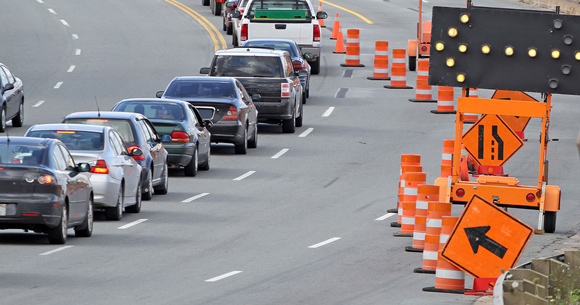
Traffic devices like barrels, cones, and barriers keep traffic flowing and protect motorists, workers, pedestrians, and bicyclists.
 
Traffic devices like barrels, cones, and barriers keep traffic flowing and protect motorists, workers, pedestrians, and bicyclists.

Traffic cones, barrels, and barriers are among the most common devices used on road construction sites, yet their role in public safety is often overlooked. These devices are essential for protecting both drivers and roadway workers by reducing confusion, slowing traffic, and creating physical separation from hazards.

Brightly colored traffic cones and barrels are designed to capture attention quickly. Their fluorescent orange color and reflective bands help ensure visibility in all conditions: daylight, low light, nighttime, and rain. Workers place cones and barrels strategically to guide drivers through lane shifts, warn of upcoming hazards, and signal changes in traffic patterns well in advance.

Traffic barriers offer another layer of protection by creating a physical buffer between moving vehicles and work areas. Temporary barriers block off closed lanes, shield workers from traffic, and prevent vehicles from entering dangerous zones. Barriers also help redirect vehicles and absorb some of the impact of a crash, should one occur.

For drivers, these maintenance of traffic (MOT) devices also improve safety by making traffic patterns more predictable. Clear lane markings and defined travel paths reduce uncertainty, particularly in complex construction zones where normal traffic patterns are disrupted.

Crews rely on these devices for protection and efficiency. When drivers follow the guidance provided by cones, barrels, and barriers, workers can focus on their tasks with fewer interruptions and less exposure to danger.

The effectiveness of traffic devices depends not only on proper placement, but also on driver cooperation. Ignoring cones, speeding through work zones, or driving around barriers increases the risk of serious injury or death to motorists, pedestrians, cyclists, and workers.


Coloring the Way to Sign Standardization

A lot of thought went into the colors motorists see on highway signs.
 
A lot of thought goes into the colors motorists see on highway signs.

In the early 1900s, roadway signs in the United States were a hodgepodge of materials, colors, fonts, shapes, and symbols that were often difficult to see at night and varied from state to state or even city to city. As automobile use became widespread and more people took to the open roads, there was a clear need for improved wayfinding and uniform signage.

The standardization of roadway signs began in the 1920s. Multiple automobile clubs and transportation departments came together and developed guidelines on sign design, placement, shapes, and colors. These early guidelines provided a strong foundation for the roadway sign standards we use today, which are updated as new research and technologies arise. Many of the original color designations from the earliest guidelines remain today, since they were chosen based on visibility and theories of color association.

The first color that comes to mind when you think about highway signs is probably green. Green signs provide directional guidance, such as exit information, or indicate permitted traffic movements. Green is a cool and non-distracting color, while the accompanying white text provides high contrast for clear readability day or night.

Blue signs offer traveler information — like nearby hotels, gas stations, and food, or roadside assistance numbers — while brown signs signify recreational, cultural, or historic areas. Both blue and brown, being cool and neutral colors, are meant to be easily identifiable without distracting drivers since they display helpful but not crucial information.

Red signs are designed to immediately grab drivers’ attention and are used for imperatives that direct motorists to stop, yield, or not enter a roadway. This “hot” color also alerts drivers when they are going the wrong way. Next to red on the color wheel is orange, which is used for temporary traffic control signs, often found on construction sites. The color is universally associated with caution and alerts drivers to changing road conditions. Yellow signs also serve as warnings. While they share orange’s association with caution, yellow signs are permanent and typically indicate curves, lane merges, or other roadway changes ahead.

White signs with black text are regulatory and inform drivers of the rules of the road. These signs may indicate the speed limit in the area or include messages such as “No Left Turn” or “Do Not Pass.” Their high contrast makes them easy to spot, without the distraction of color.

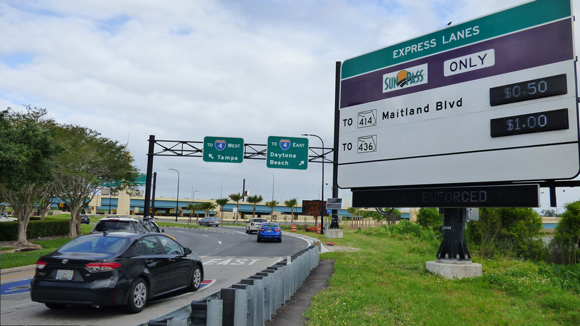
Other colors you may encounter on the road include purple for electronic toll collection signs, fluorescent pink for incident management signs, and fluorescent yellow-green for pedestrian, bicycle, and school warning signs.

Every color on roadway signs serves a purpose. Each standardized color helps drivers quickly recognize the type of information being presented so they can make safe decisions on the road. Next time you’re on the road, take a moment to which signs stand out to you.